Tea Virtue
茶徳
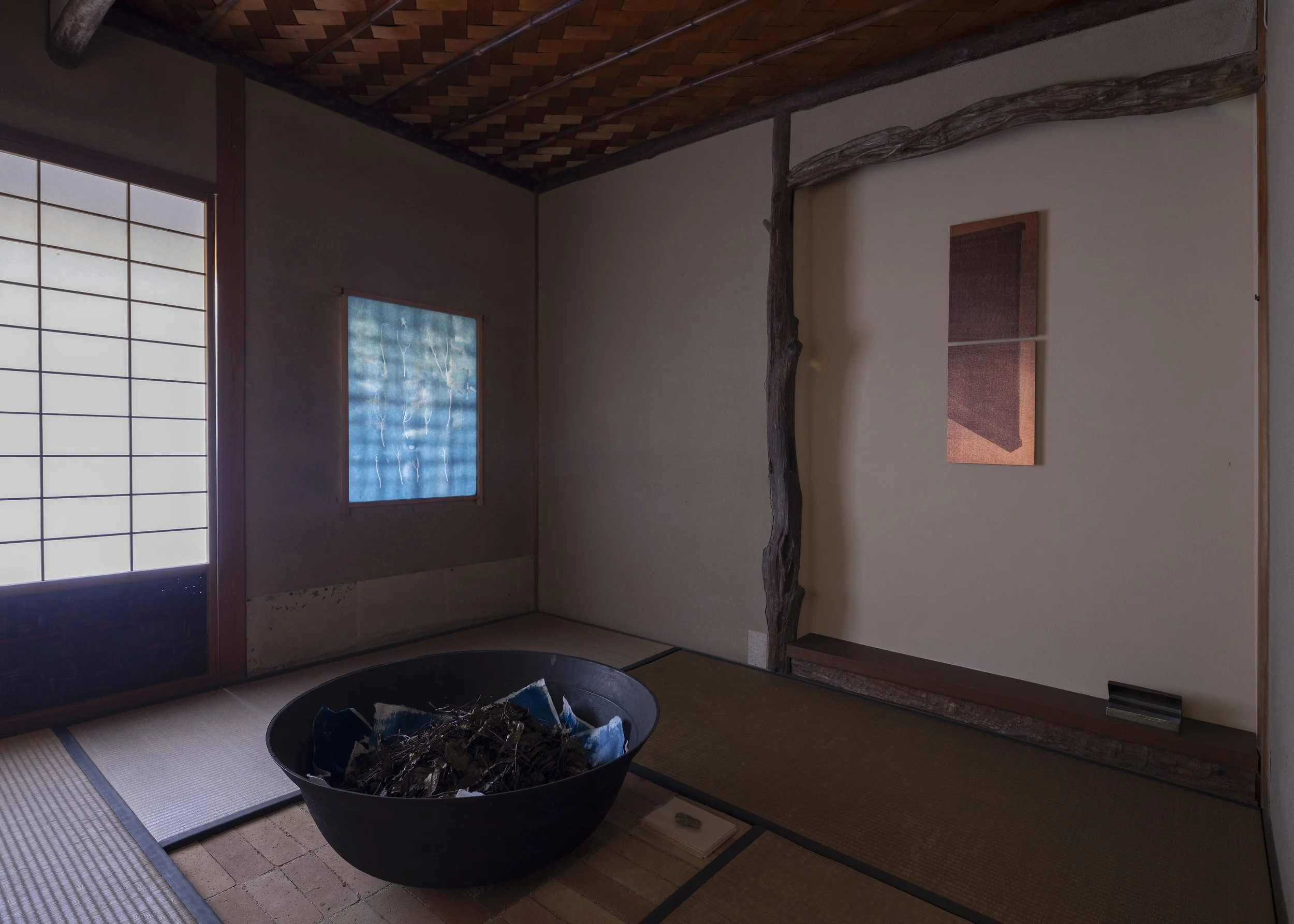
茶祖である明菴栄西は備中出身であり、またこのエリアでは昔から続く天日乾燥によって美作番茶が作られています。そこに着目し、お茶をモチーフ、“境界”をテーマに制作を行いました。
展示タイトルの『茶徳 / Tea Virtue』は、栄西禅師の弟子明恵上人が茶の効能を広めるために定めた十ヶ条「茶十徳」に由来します。効能の話から分かるように、栄西が記した「喫茶養生記」に記されているお茶は、茶道に代表される禅的思想に基づくものではなく、もっと民俗的、土着文化的なものでした。本展示でも、土着文化から捉えたお茶を、禅的空間である茶室にて展開しています。
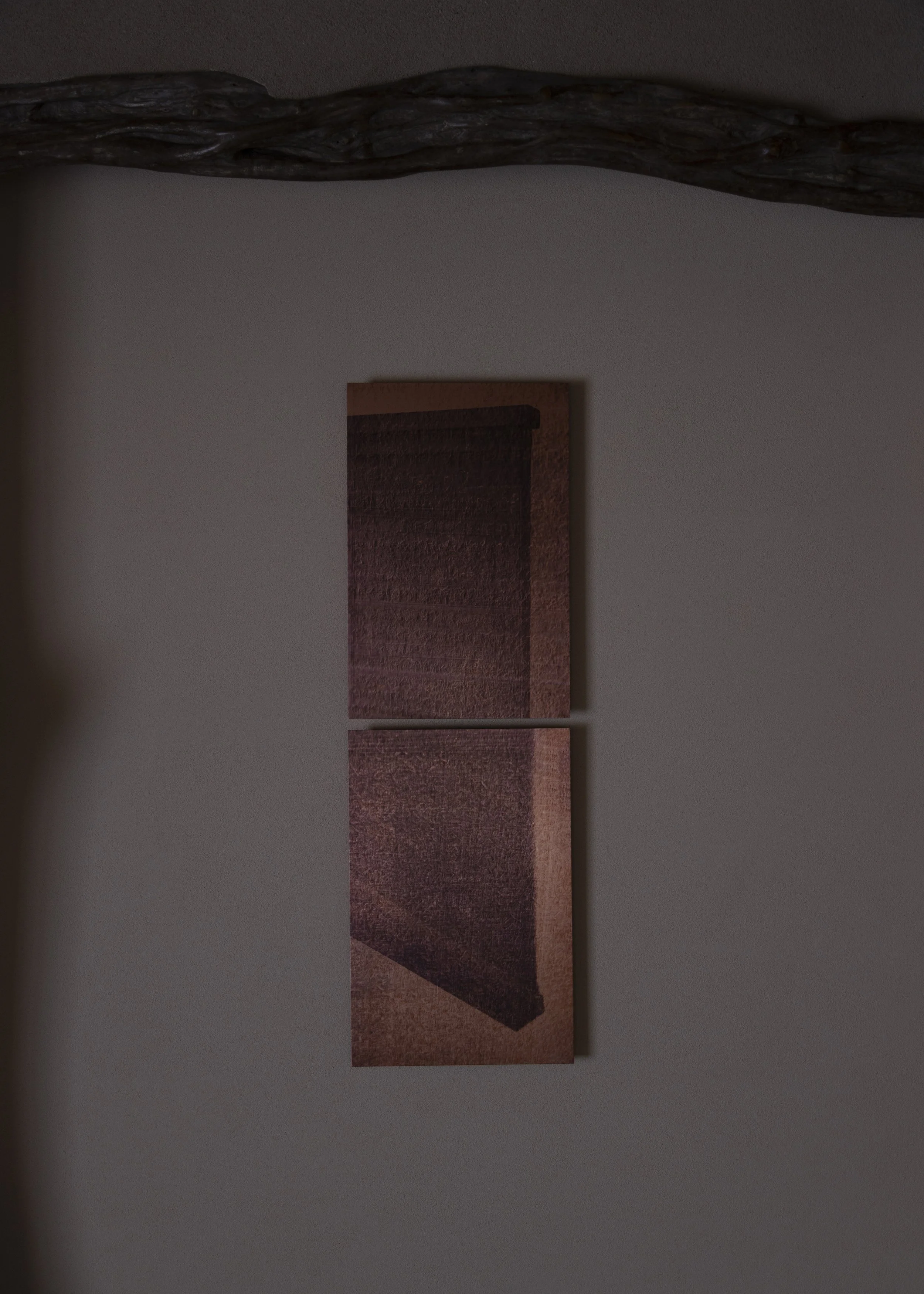
一作品目、養生 philosophyは、京都・両足院に所蔵された「喫茶養生記」版木の写真を重ねた作品です。時代という“境界”を超えて広がり伝わる、栄西の思想を表しています。写真を重ねた密な作品は、禅的な空ではなく、世俗的な効用を説いた「喫茶養生記」の思想を表すと共に、写すことが目的である被写体の版木の機能と対になっています。
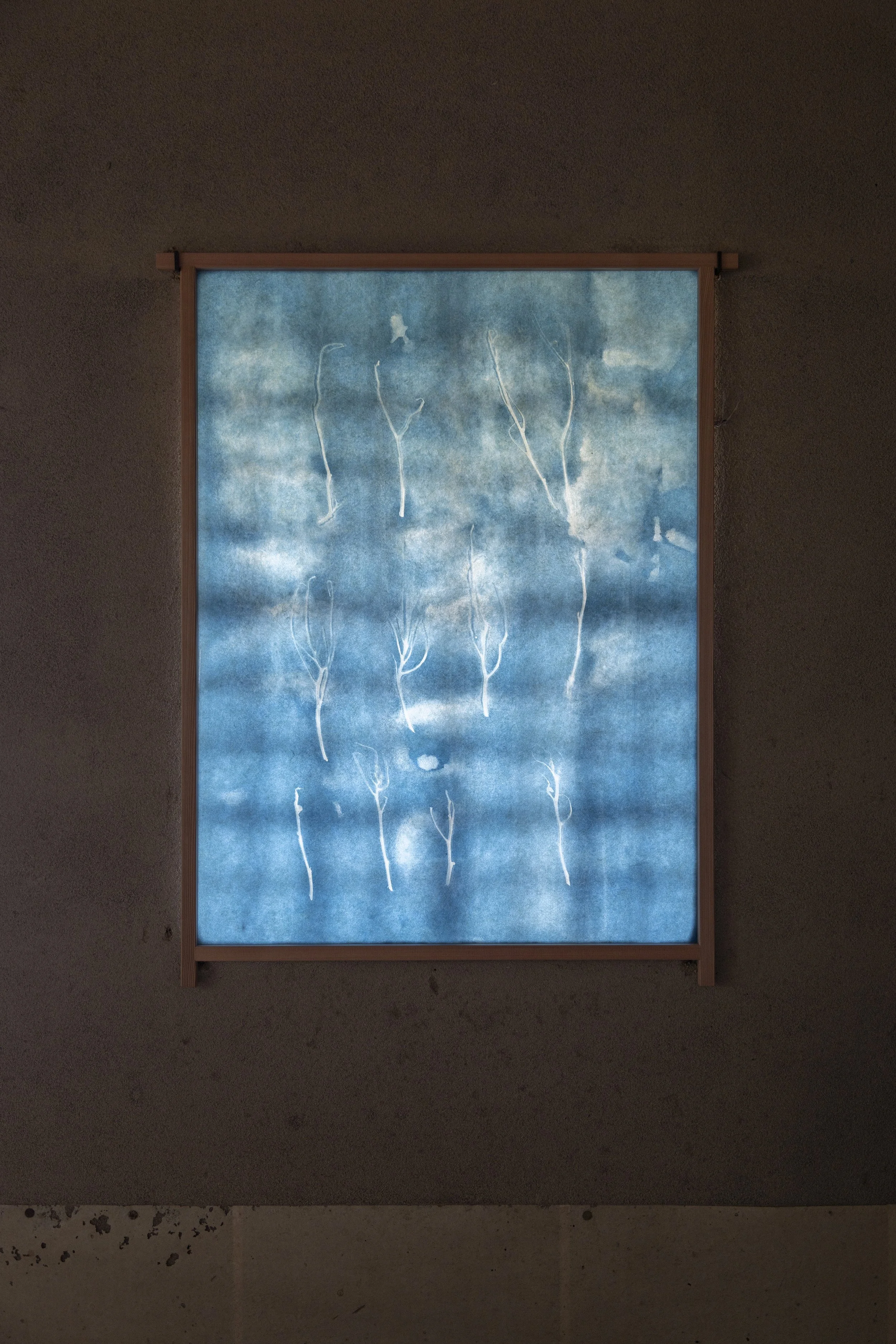
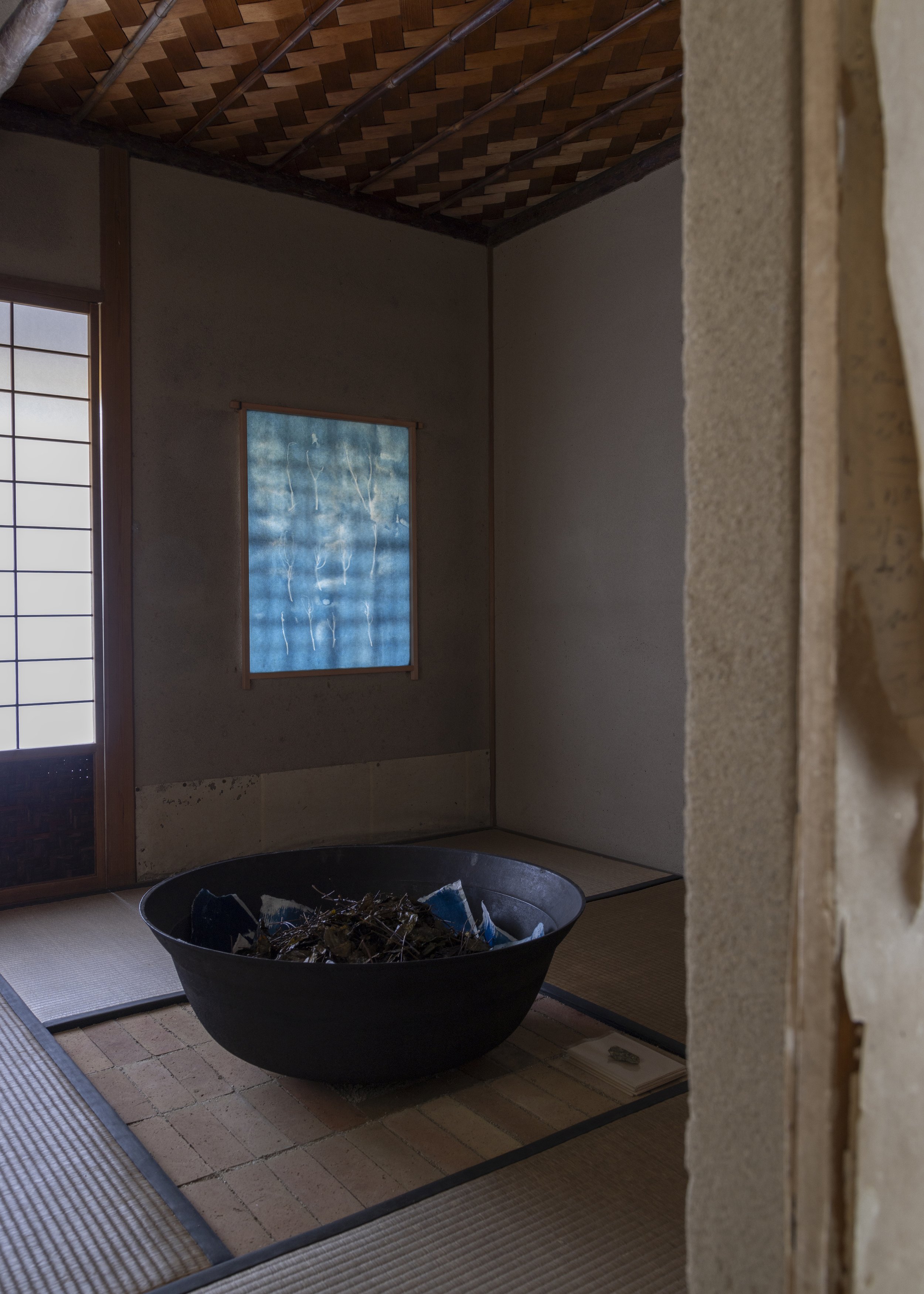
二作品目、翫味 durationは、美作番茶の茶枝のサイアノタイプです。ご存知のように岡山は晴れの国と言われるほど年間の日照時間が多いエリアです。その日照を利用して美作番茶は作られます。このサイアノタイプも岡山の太陽光と茶の煮汁によって制作しました。茶樹の原種は国境という“境界”をまたがる山岳地帯に自生していたと言われています。当時のお茶は、現在もワ族にみられる「焼茶」に近いものだったと考えられます。焼茶では枝ごと摘んだお茶を用います。番茶でも同様に茶枝を用いますので、原初のお茶と美作番茶で共通する茶枝を被写体に用いました。境界という観点からは、熟茶や番茶などの茶加工の技術は、賞味可能な期間という“境界”を伸ばすため発展したといえるでしょう。
三作品目、祝福 acceptanceは、美作番茶と茶柱の作品です。土着文化的には、お茶を供することは、相手を受け入れる、歓迎するという、自他の“境界”を超えることを意味しています。茶柱が立っていますが、縁起の良い立った茶柱のことは自分の中に留めて人に言わない方が良いとされています。本作には、観客を祝福する気持ちと、観客が鑑賞体験をしっかり自分の中に留めて欲しいという願いを重ねました。
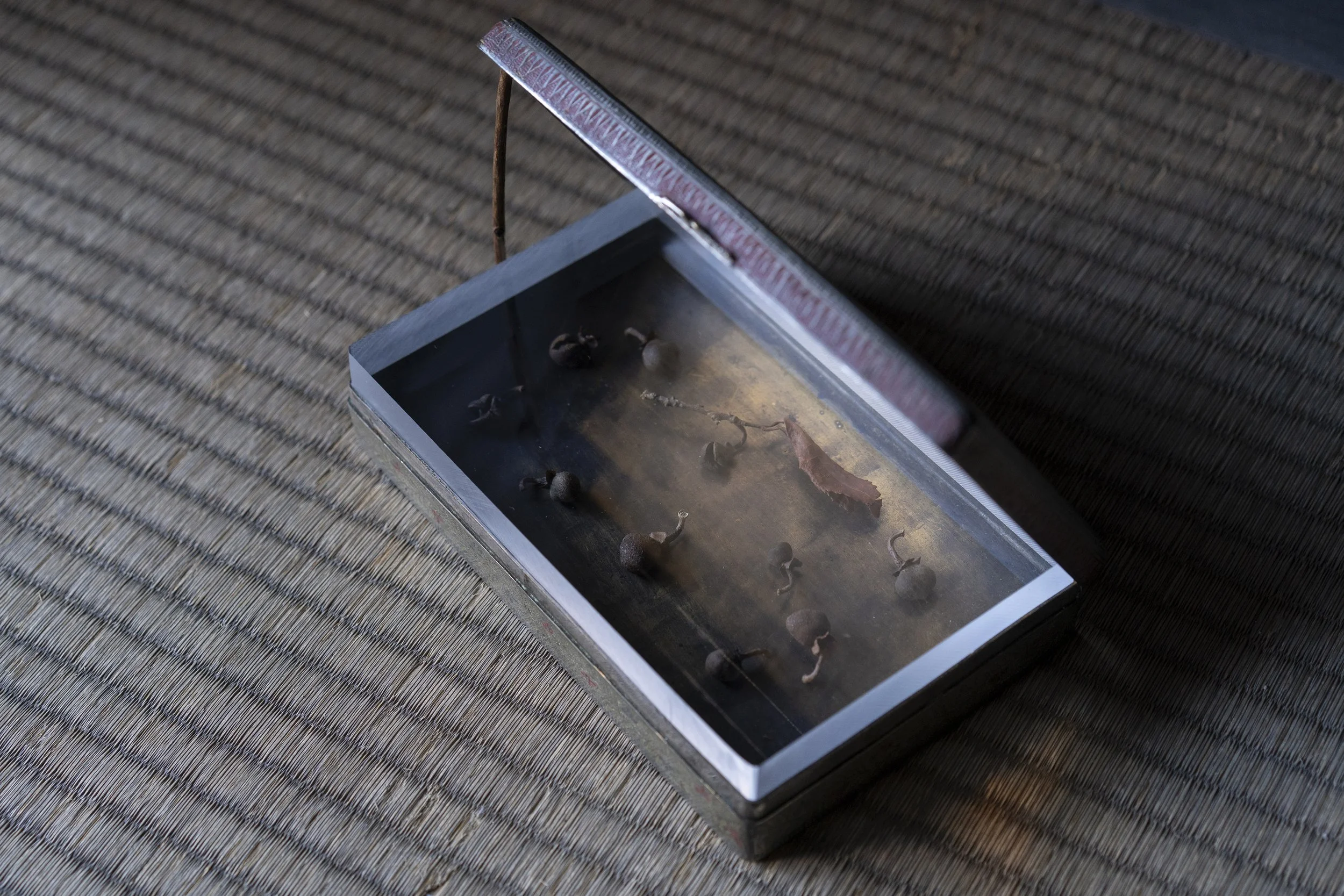
四作品目、輪繁 inheritanceは、明庵栄西が日本に持ち込んだ茶と同じDNAを有した茶樹の実からなる作品です。茶の実から茶の実へと、1000年の時の“境界”を超えて繋がった輪を象徴しています。
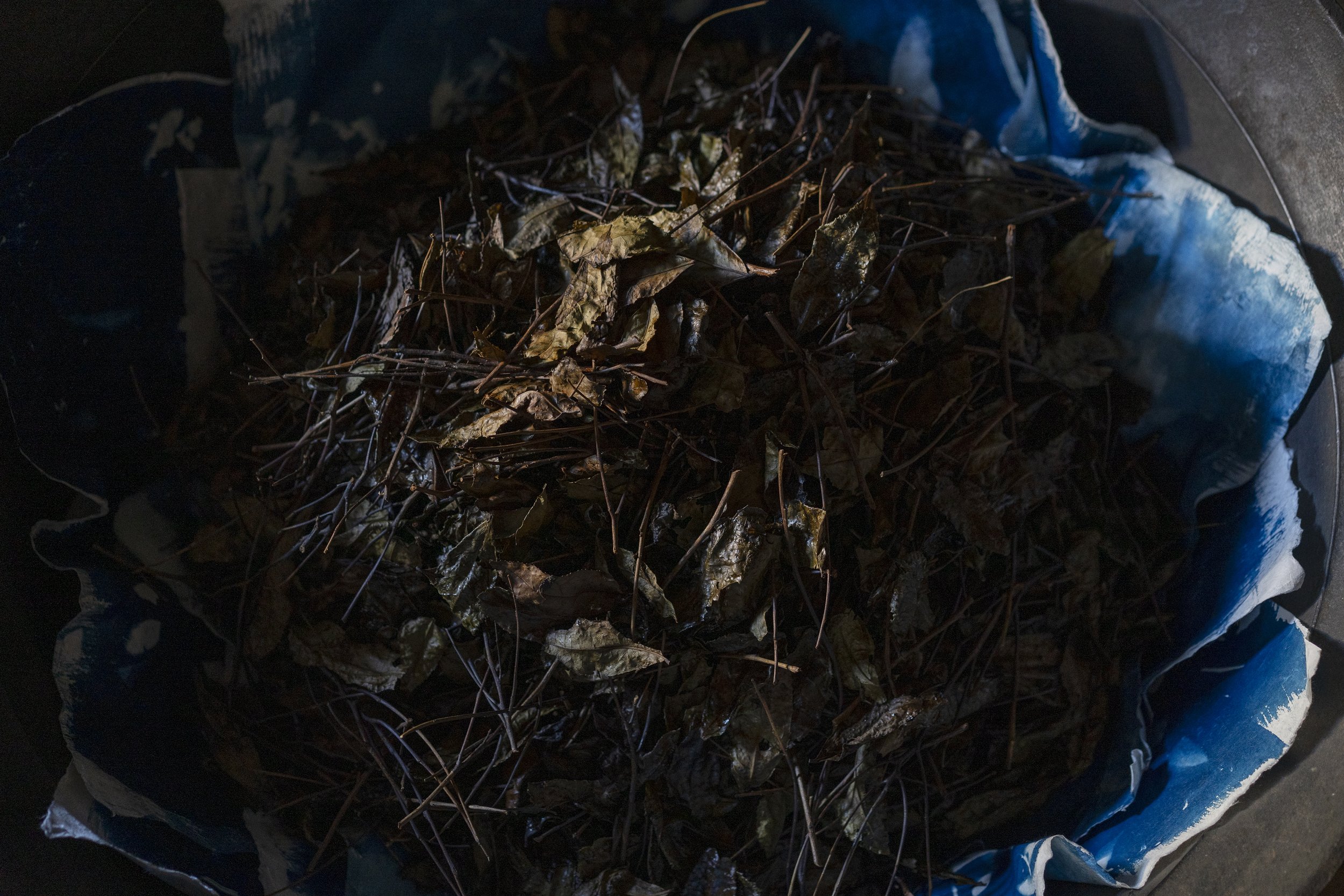
五作品目、永存 memoryは、美作番茶、美作番茶を制作するための釜、美作番茶のサイアノタイプから構成される作品です。この作品では鑑賞者に美作番茶を自由に持って帰ってもらいます。香典返しにはお茶が配られますが、古くからお茶は“境界”を区切ることの象徴とされており、お茶を配ることには故人と別れる意味が込められています。つまりお茶を持って帰ってもらうことは本展示との別れを暗示しています。一方で、この作品の底には美作番茶のサイアノタイプがあり、お茶の葉が無くなっても、確かにそこに存在したという気配が感じられます。これは形見わけという行為、故人の存在が感じられるものを残された人々が所有することによって、故人が人々の記憶の中、関係性の中で生き続けるという、死という境界を超えるための祈りが込められています。
茶室という禅的な空間で、様々な“境界”の縛りから解放される瞬間を提供するための作品展示を行います。
-
Tea Virtue
The Zen monk Myoan Eisai (1141–1215), regarded as the founder of tea culture in Japan, was born in Bitchū (present-day Okayama Prefecture). This region is also home to Mimasaka Bancha, a traditional tea produced through a long-established method of sun-drying. Focusing on these local histories, I have created this exhibition using tea as its primary motif while exploring the theme of boundaries.
The exhibition title, Tea Virtue, derives from the Cha Jittoku ("The Ten Virtues of Tea"), a set of ten teachings established by the monk Myoe, a disciple of Eisai, to promote the benefits of tea. As suggested by these teachings, the tea described in Eisai's Kissa Yōjōki (Drinking Tea for Health) was not yet associated with the Zen aesthetics later embodied in the Japanese tea ceremony. Rather, it belonged to a more vernacular, indigenous culture rooted in everyday life. Accordingly, this exhibition presents tea understood through the lens of local tradition within the contemplative setting of a Zen tearoom.
Yōjō – Philosophy
The first work layers photographs of the original woodblocks used to print Kissa Yōjōki, preserved at Ryosokuin Temple in Kyoto. The overlapping images symbolize Eisai's ideas transcending the boundaries of time and continuing to spread across generations.
The density created by these multiple photographic layers deliberately contrasts with the Zen notion of emptiness (kū). Instead, it reflects the practical and worldly philosophy of Kissa Yōjōki, which advocated tea for its tangible benefits to everyday life. At the same time, the work mirrors the original function of the woodblocks themselves—as devices for reproduction—creating a dialogue between the act of printing and the act of photography.
Ganmi – Duration
The second work is a cyanotype made from the branches of Mimasaka Bancha tea trees. Okayama is widely known as the "Land of Sunshine," blessed with one of the highest numbers of sunny days in Japan. Mimasaka Bancha itself is produced by utilizing this abundant sunlight, and likewise this cyanotype was created using Okayama's sunlight together with an extract of boiled tea leaves.
The wild ancestors of the tea plant are believed to have grown in mountainous regions that straddle national borders. Early tea is thought to have resembled what is today known among the Wa people as roasted tea, in which entire branches are harvested. Since Mimasaka Bancha is likewise produced using tea branches, this work adopts the branch itself as its subject, connecting contemporary regional practice with the origins of tea culture.
Viewed through the concept of boundaries, techniques for processing tea—including fermented teas and bancha—may be understood as technologies developed to extend the boundary of edibility and preservation.
Shukufuku – Acceptance
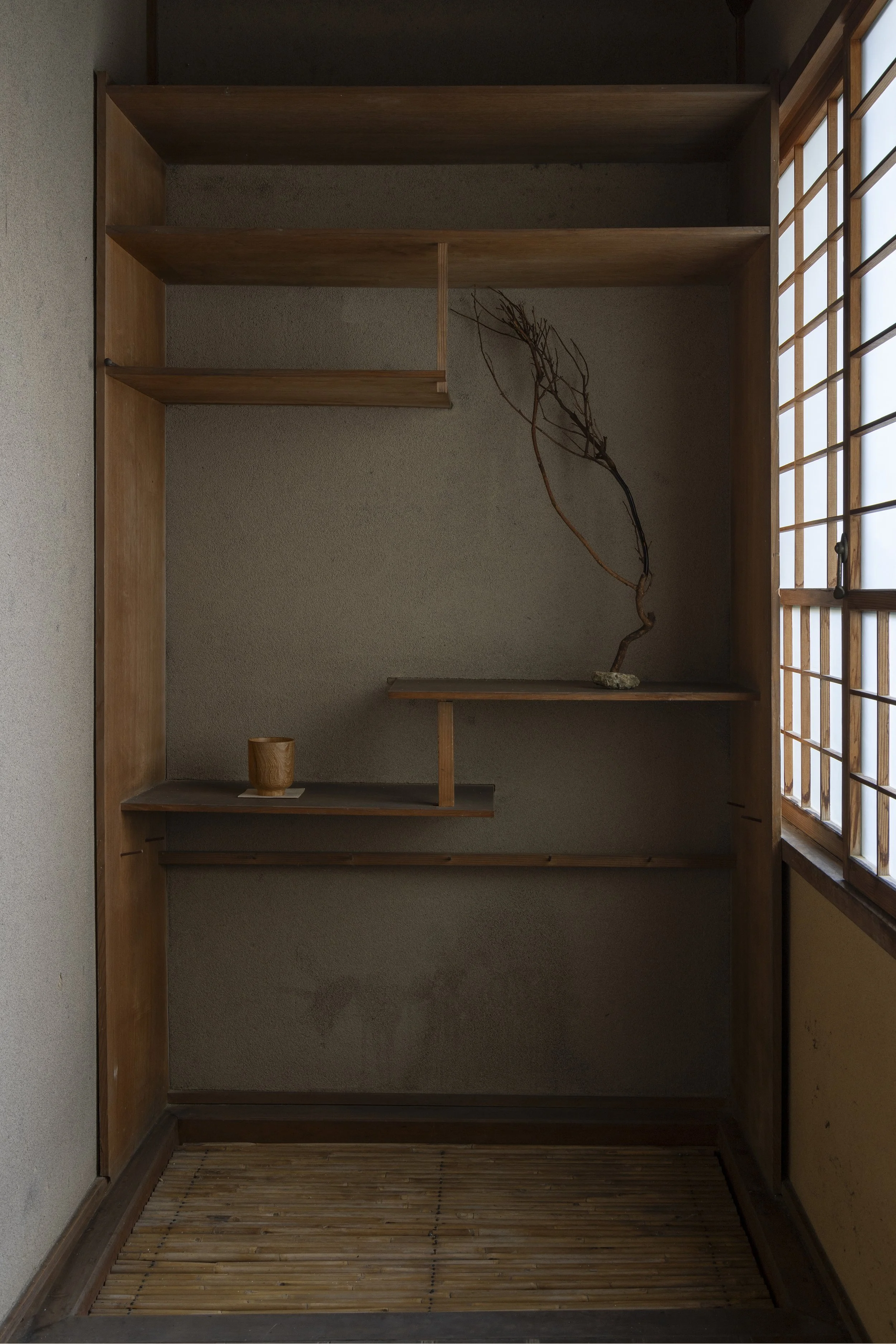
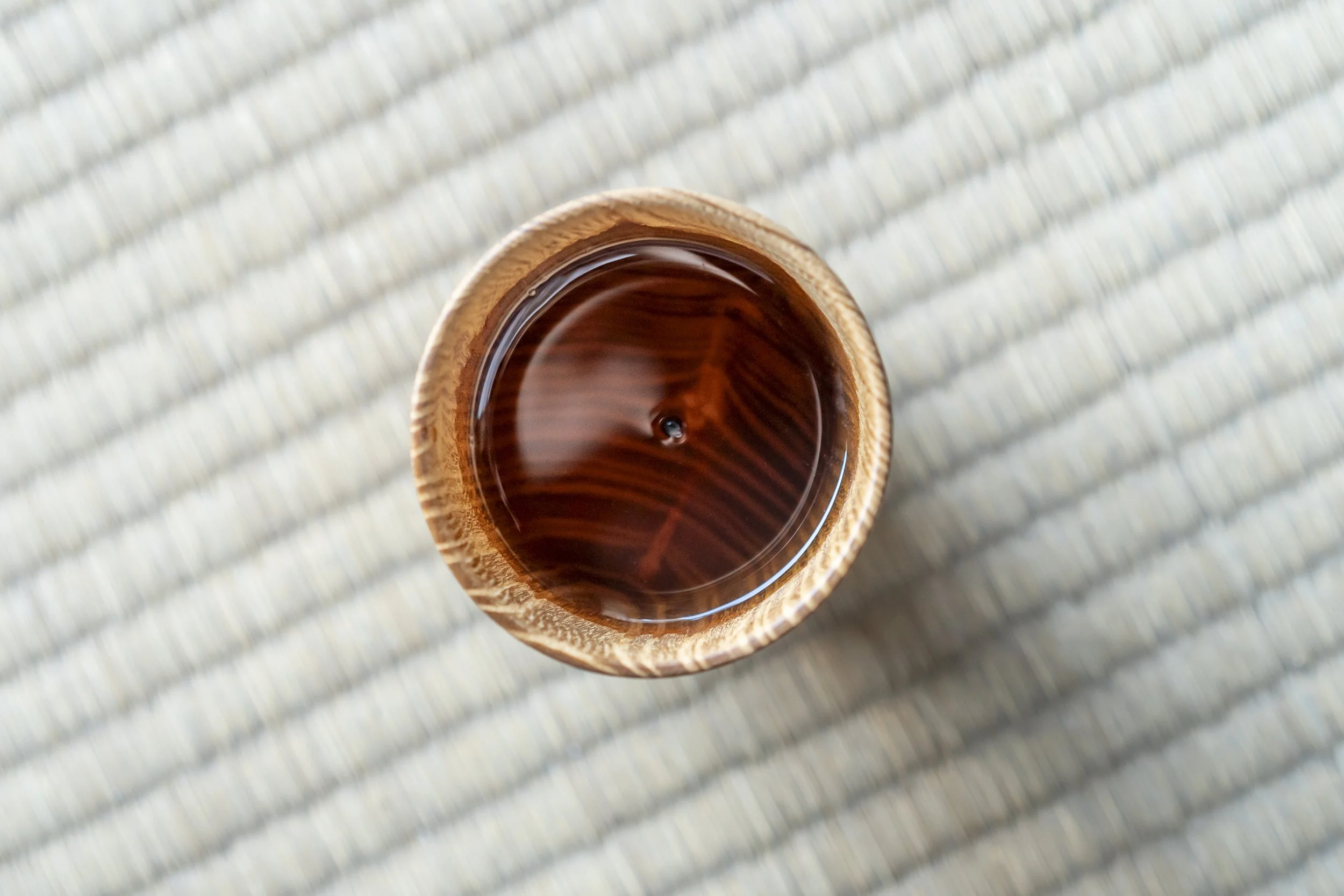
The third work combines Mimasaka Bancha with a standing tea stalk (chabashira), a traditional symbol of good fortune in Japan.
Within vernacular tea culture, offering tea signifies welcoming another person and accepting them into one's space, crossing the boundary between self and other. At the same time, Japanese folklore holds that one should quietly treasure the good fortune of discovering a standing tea stalk rather than announcing it to others.
This work expresses both a blessing for each visitor and the hope that the experience of the exhibition will remain quietly within them, becoming a personal memory rather than something immediately shared.
Rinhan – Inheritance
The fourth work consists of tea seeds from a tea tree that shares the same genetic lineage as the tea plants introduced to Japan by Eisai nearly one thousand years ago.
Passing from seed to seed across generations, the work symbolizes a continuous cycle that transcends the boundary of a millennium, embodying the inheritance of both biological life and cultural memory.
Eizon – Memory
The final work consists of Mimasaka Bancha, the iron kettle traditionally used to produce it, and a cyanotype depicting the tea itself.
Visitors are invited to freely take the tea home with them. In Japan, tea has long been distributed as a return gift after funerals. Historically, tea has symbolized the marking of boundaries, and the act of giving tea signifies a farewell to the deceased.
Likewise, taking tea from this installation suggests a parting from the exhibition itself.
Yet beneath the disappearing tea lies a cyanotype image of Mimasaka Bancha. Even after the physical tea has been taken away, its trace remains. This gesture recalls the Japanese custom of katamiwake—the sharing of a deceased person's belongings among family and friends—through which memory continues to exist beyond death. The work therefore expresses a wish to transcend the boundary of mortality by allowing presence to persist through memory and human relationships.
Within the contemplative space of the tearoom, this exhibition invites visitors to experience moments of release from the many boundaries that shape our lives—between past and present, self and other, life and death, nature and culture. Through tea, these boundaries are not erased but gently traversed, revealing the invisible connections that continue across time.
Venue : Jo-toh Mukashi Machiya
Location : Tsuyama city, Okayama
Date : 2024. 9. 28 – 11. 24
Organizer : Forest Festival of The Arts Okayama 森の芸術祭 晴れの国 岡山 2024
Art Director : Yuko Hasegawa
Curator : Kentaro Watanabe
Cooperation : Kobayashi Hokouen, Ryosokuin Temple
Special thanks : Shu Arita, Satoshi Someya, Yoshiyuki Takimoto, Aki Miyake