Tea Virtue
茶徳
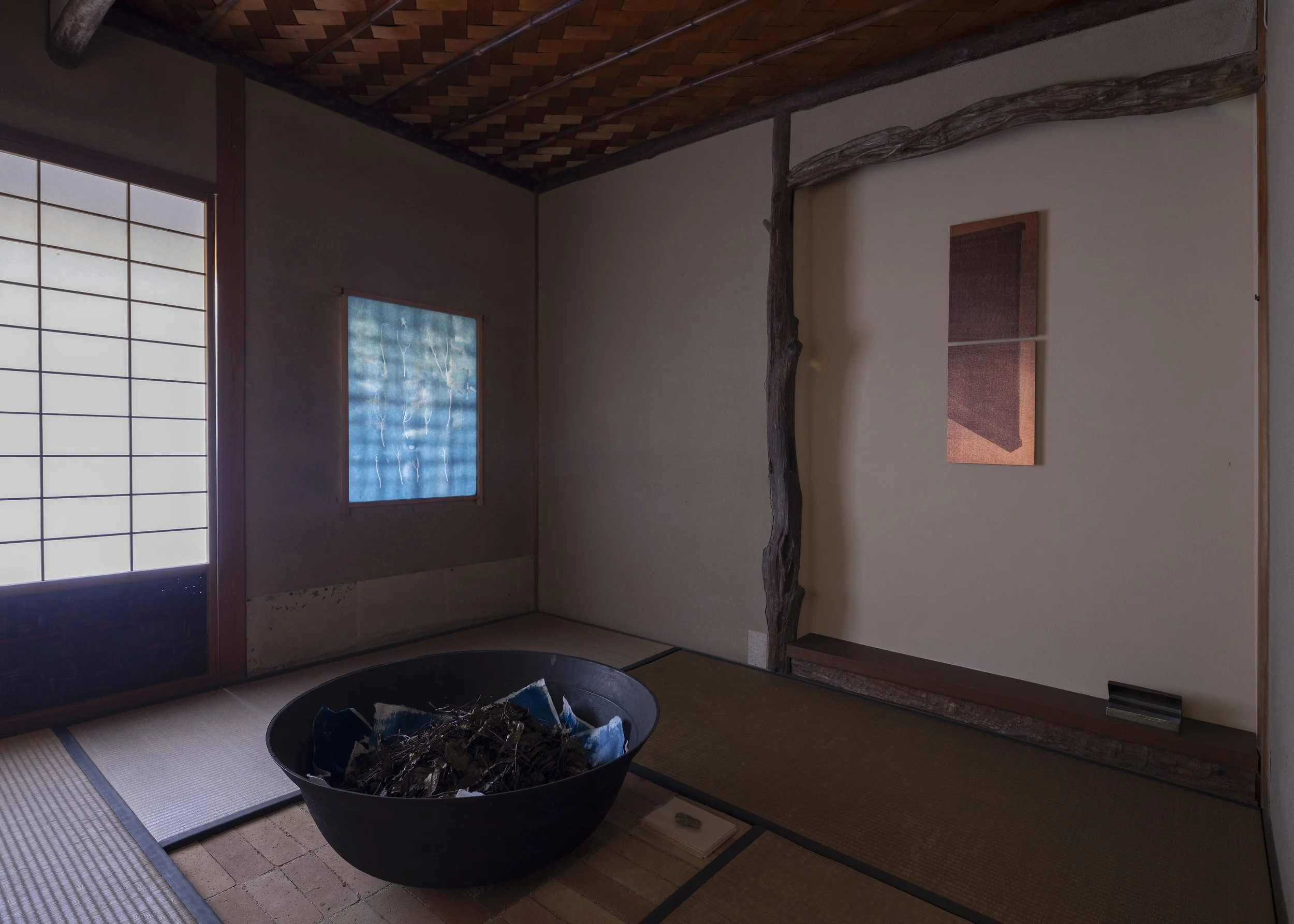
本作は、岡山県北部・津山市の「むかし町家」を会場として制作したインスタレーションである。岡山県北部の美作エリアは、茶祖・明菴栄西の生誕地である備中とゆかりを持ち、また周辺地域では古くから天日乾燥による美作番茶の製法が受け継がれてきた土地でもある。本作では、この地域に根付く茶文化を起点に、「境界」という概念について考察を試みた。
私たちの世界は、国境、時間、生と死、自然と文化、自他といった、さまざまな境界によって構成されている。しかし、それらの境界は固定されたものではなく、文化や人々の営みによって絶えず横断され、更新され続けてきた。
茶は、その境界を往還する存在である。
茶樹の原種は、現在の中国・雲南省、インド・アッサム、ミャンマー、チベットにまたがる山岳地帯に自生していたとされる。国境が成立する以前から存在していた茶は、人の移動とともに文化圏を越え、日本へと伝播した。明菴栄西は茶種を日本へもたらし、『喫茶養生記』によってその医学的効能と栽培法を広めた。一方で、茶は禅宗において精神修養のための飲み物としても受容され、「茶の湯」へと発展していく。
こうした歴史をたどると、茶は自然と文化、民俗と宗教、身体と精神といった異なる領域を媒介してきた存在であることが見えてくる。
展示タイトル《茶徳 / Tea Virtue》は、栄西の弟子・明恵が説いた「茶十徳」に由来する。本展では、その「徳」を効能としてではなく、人と人、人と自然、過去と現在、生と死をつなぐ力として再解釈した。
展示は五つの作品から構成される。
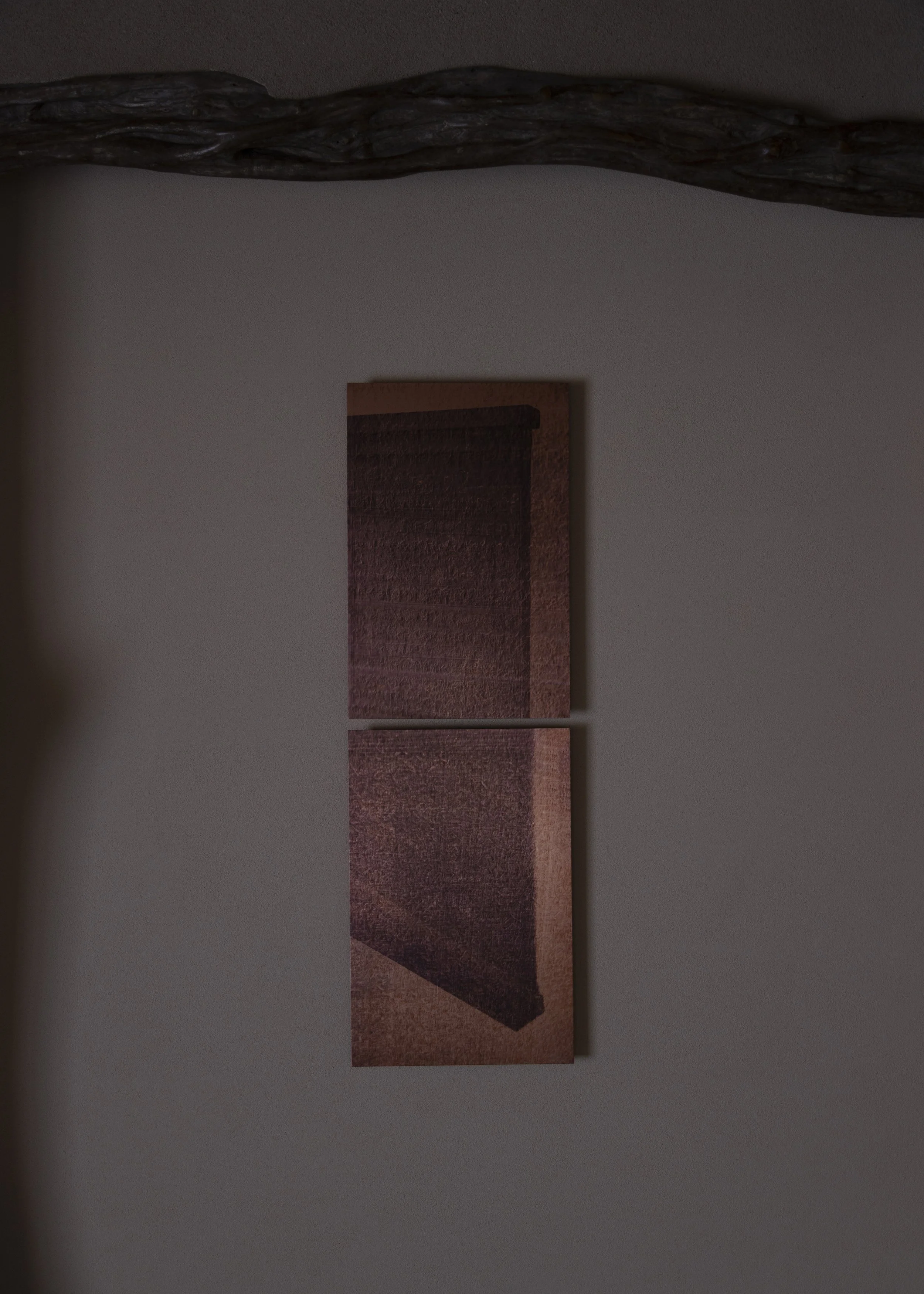
《養生 / Philosophy》では、『喫茶養生記』版木の写真を幾重にも重ねることで、時代を超えて継承される思想を可視化する。
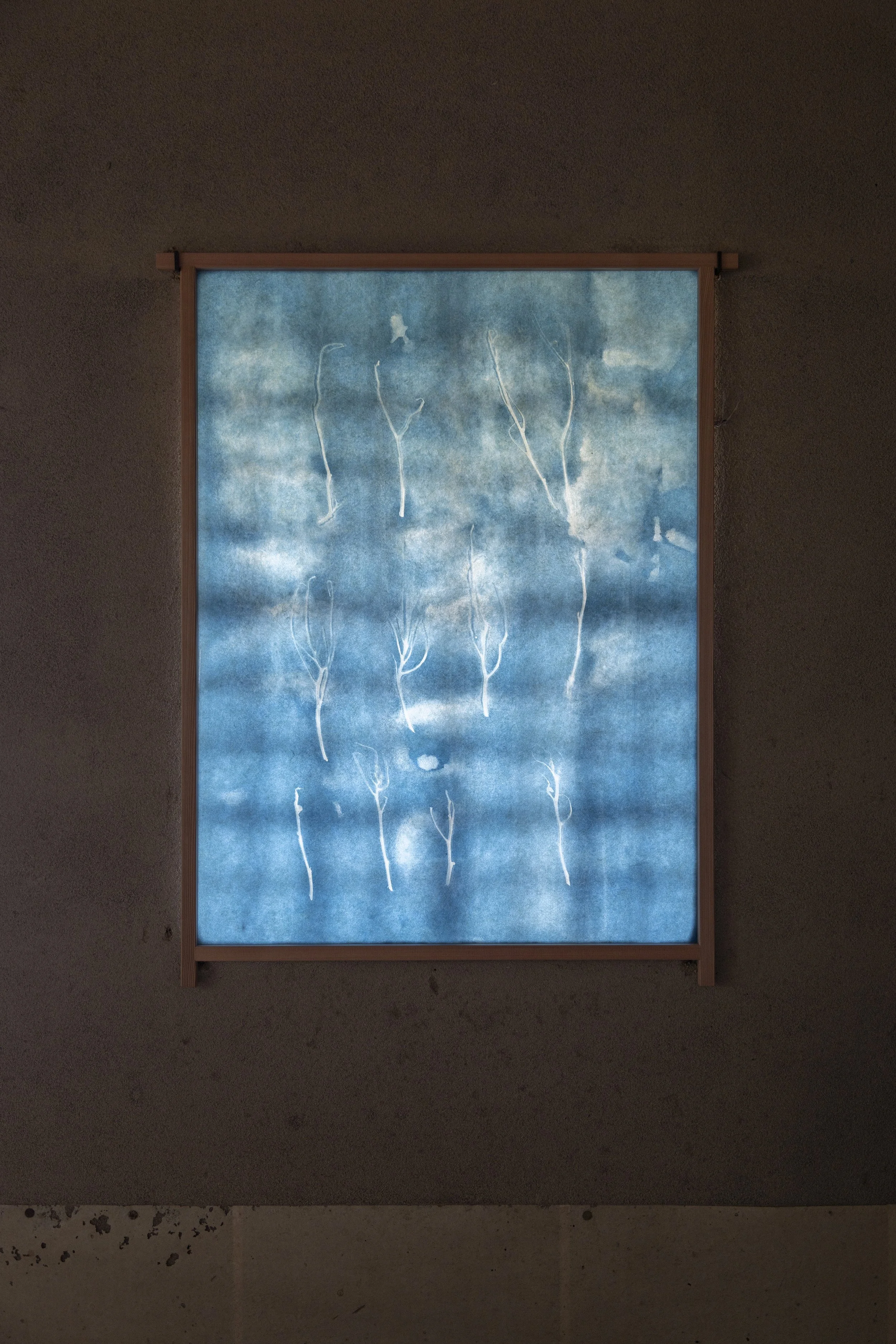
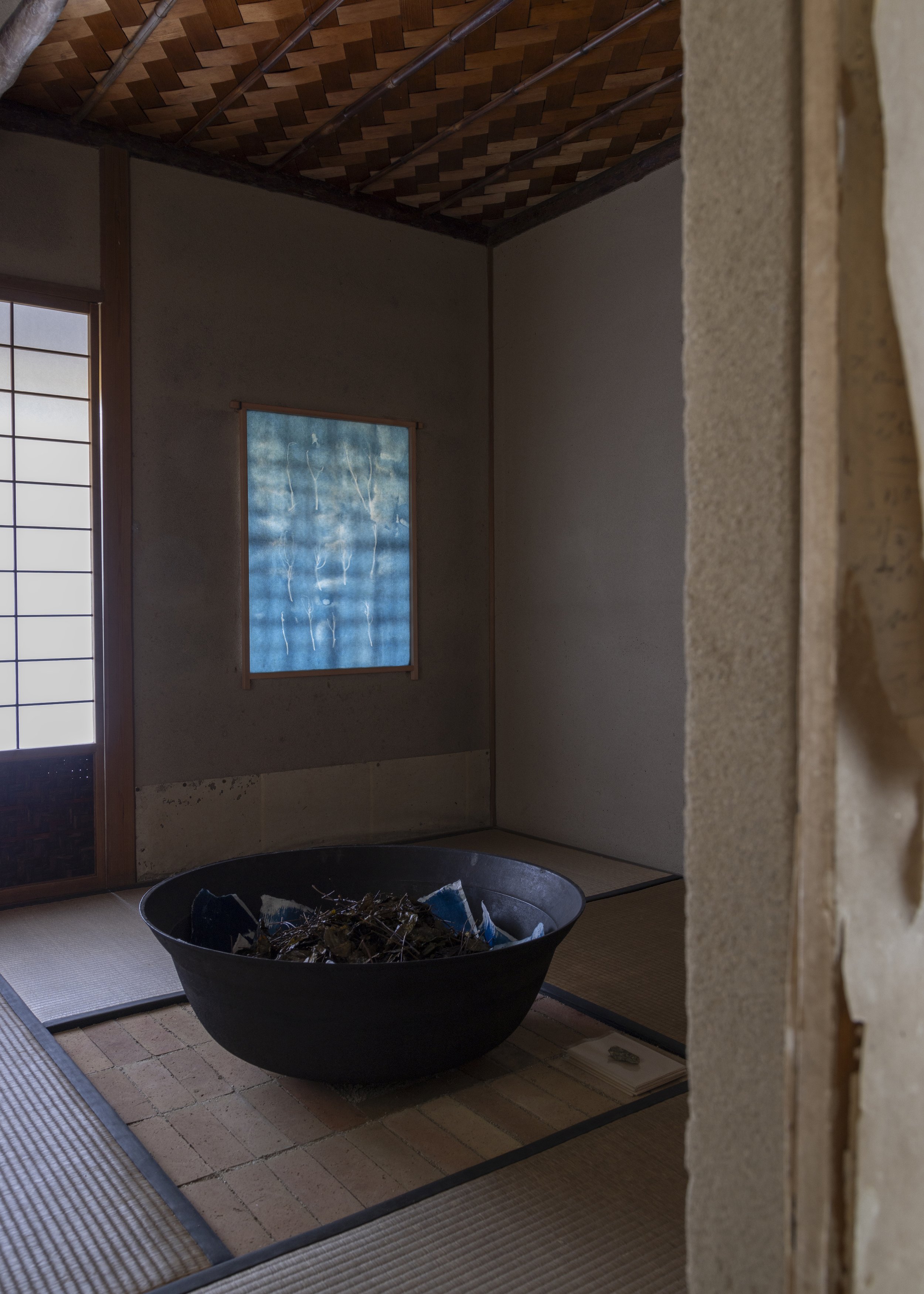
《翫味 / Duration》では、美作番茶の茶枝をサイアノタイプによって記録した。作品は岡山の太陽光と番茶の煮汁によって制作され、土地の光そのものを像として定着させている。枝というモチーフは、原初の茶文化から現代の番茶まで受け継がれる時間の連続性を示すと同時に、保存技術が時間という境界を延長してきた歴史を映し出している。
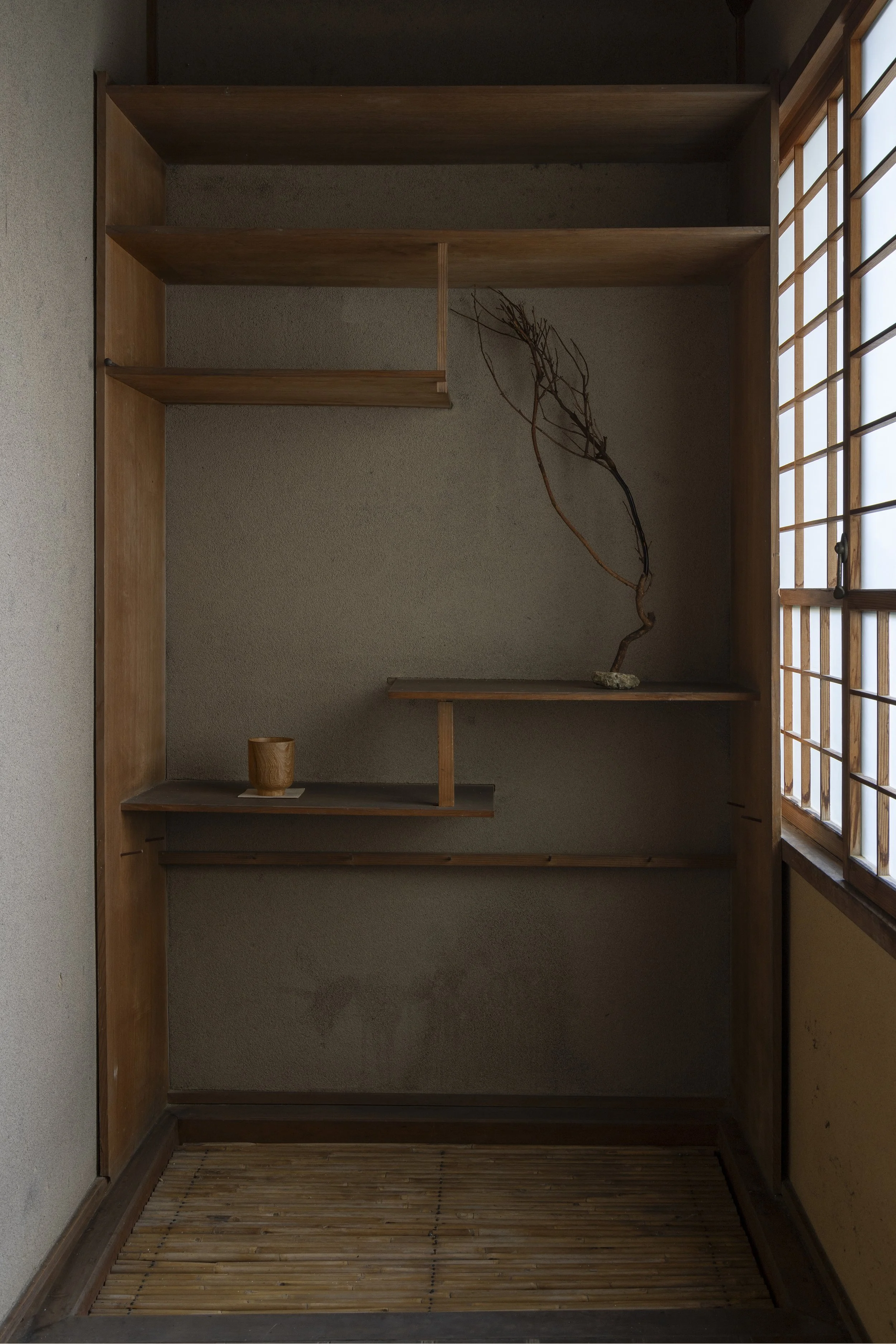
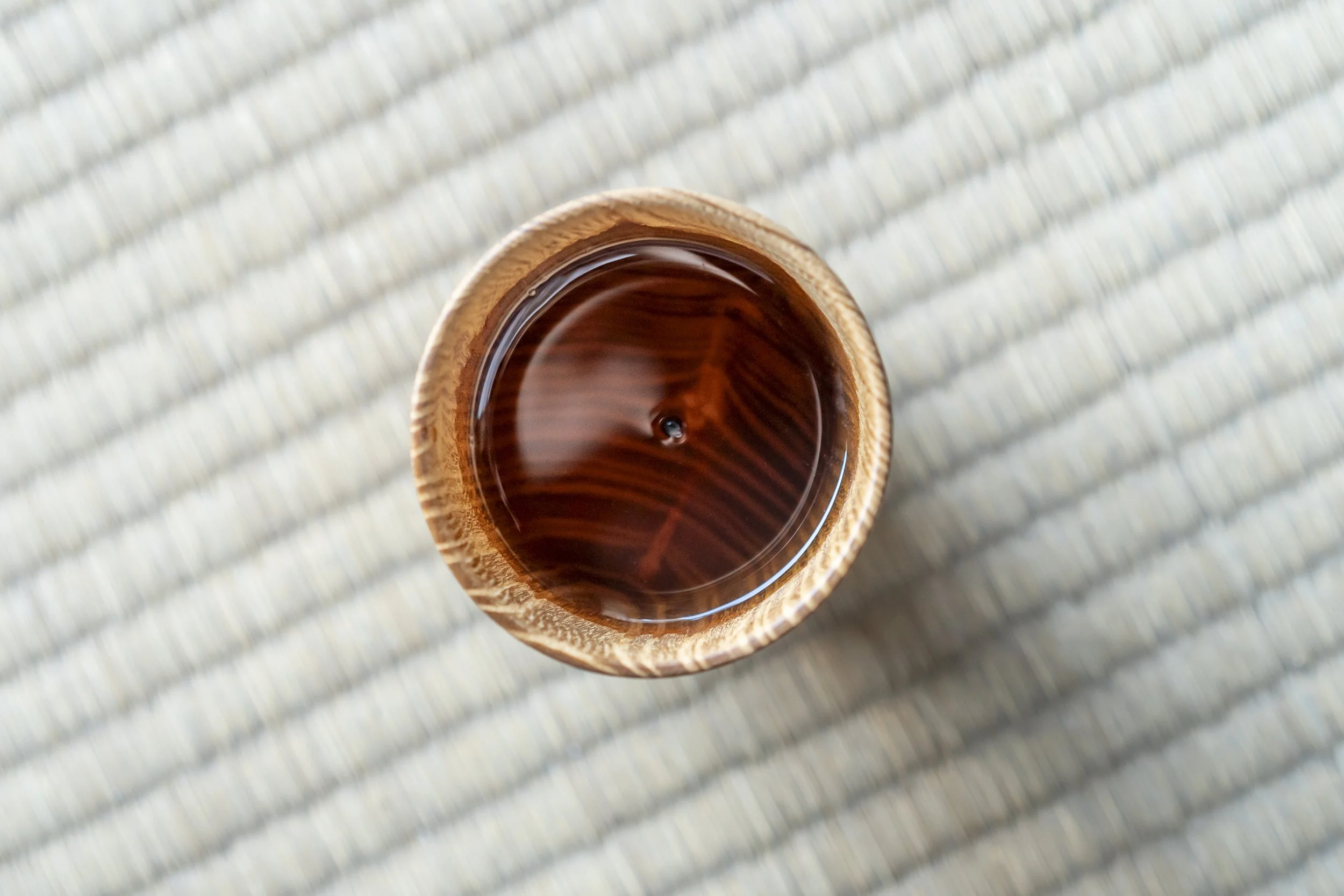
《祝福 / Acceptance》では、美作番茶と茶柱を用いる。茶を供する行為は、他者を受け入れ、自他の境界を越える民俗的な儀礼である。同時に、茶柱に込められた祝福は、鑑賞体験を他者へ消費されるものではなく、それぞれの内面に留められるべき記憶として位置付けている。
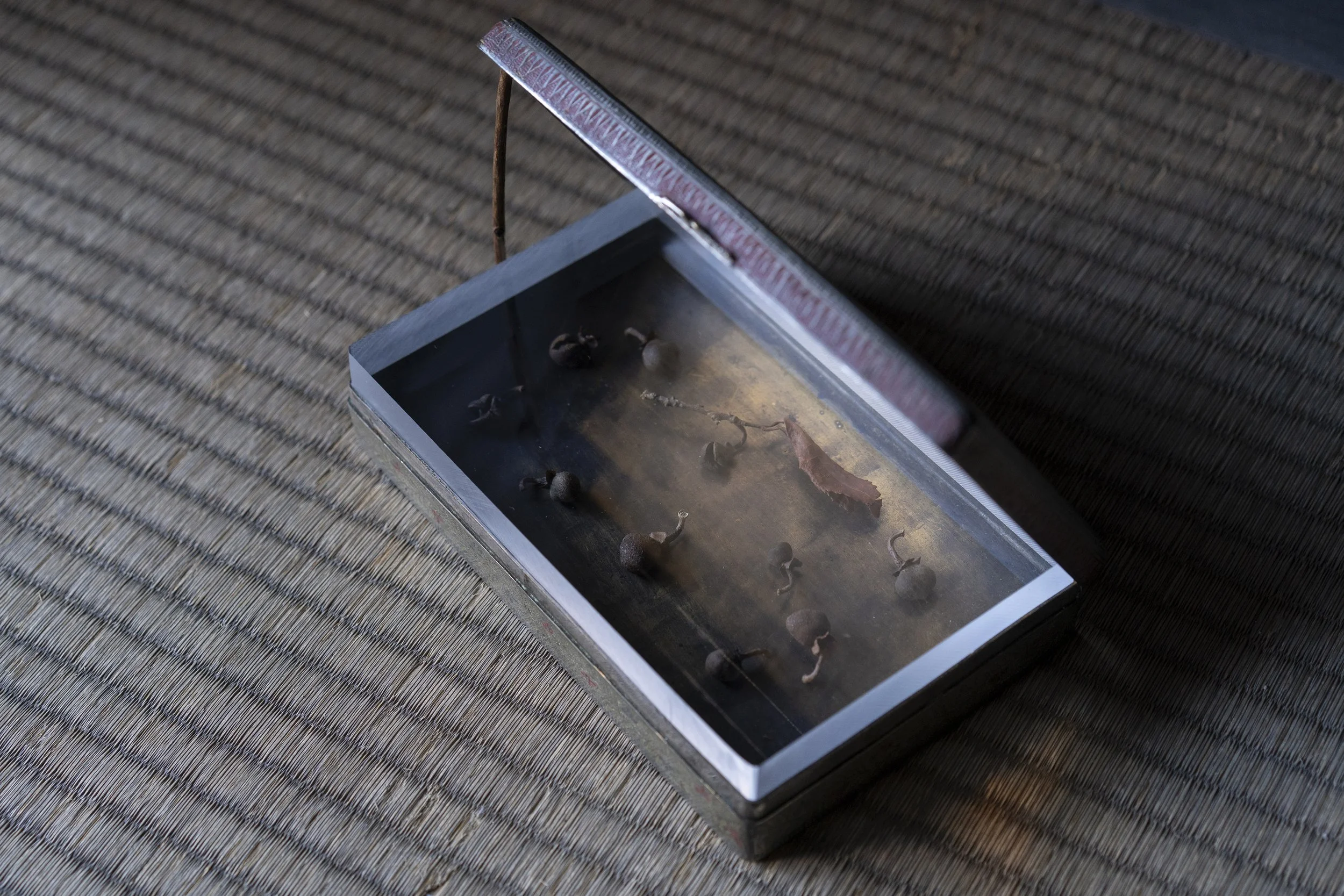
《輪繁 / Inheritance》は、栄西が日本へもたらした茶と同一のDNAを持つ茶樹の実によって構成される。茶の実から茶の実へと約千年にわたり受け継がれてきた生命の連続性は、時間という境界を越える循環を象徴している。
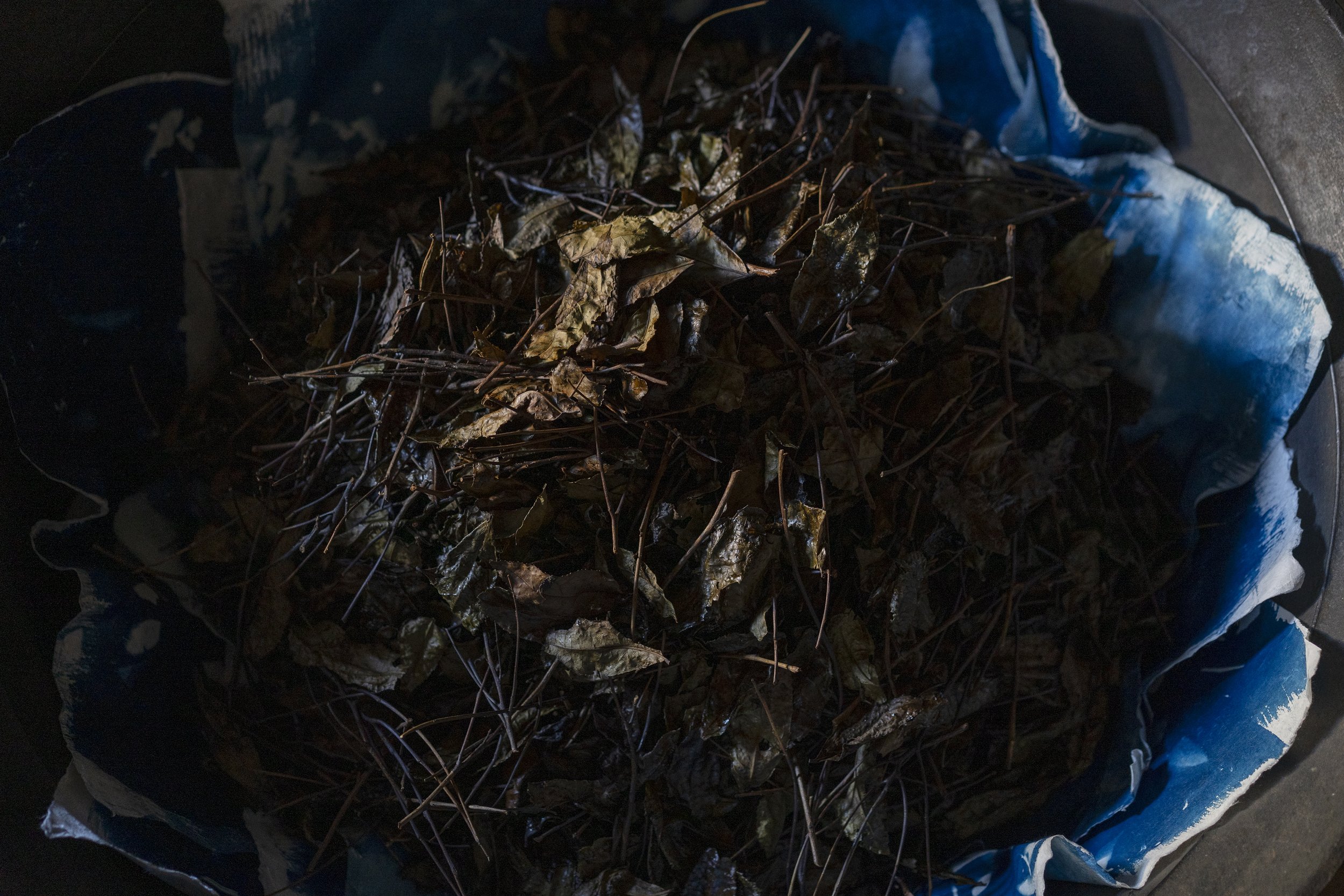
《永存 / Memory》では、美作番茶を鑑賞者が自由に持ち帰ることができる。茶を持ち帰る行為は展示との別れを意味する一方、器の底には番茶のサイアノタイプが残されている。茶葉が失われても、その痕跡はそこに留まり続ける。形見が故人の存在を記憶の中に宿し続けるように、本作は死という境界を越えてなお持続する関係性への祈りを内包している。
茶室は、本来、自己と他者、世俗と精神、内と外を媒介するための空間である。本展では、その茶室を現代美術の場として捉え直し、茶という文化を通して、私たちを規定しているさまざまな境界を一時的に揺るがす体験を提示する。
茶を飲むこと、記憶を継承すること、誰かを迎え入れること。それらの行為はすべて、境界を越える営みなのである。
-
Tea Virtue
This installation was created for Mukashi Machiya, a historic townhouse in Tsuyama, located in the northern part of Okayama Prefecture, Japan. Okayama is closely connected to Myoan Eisai, the Zen monk credited with introducing tea to Japan, who was born in the former Bitchū Province. The surrounding region has also preserved the traditional production of Mimasaka Bancha, a local tea that has long been naturally sun-dried. Drawing upon this regional tea culture, the installation explores the concept of boundaries through the motif of tea.
Our lives are shaped by countless boundaries—between nations, cultures, life and death, nature and culture, self and other. Yet these boundaries are never fixed. They have continuously been crossed, negotiated, and transformed through human movement, cultural exchange, and the passage of time.
Tea itself is a medium that traverses such boundaries.
The wild ancestors of the tea plant are believed to have originated in the mountainous region spanning present-day Yunnan in China, Assam in India, Myanmar, and Tibet. Long before modern national borders existed, tea spread across cultures through migration and exchange. Myoan Eisai brought tea seeds to Japan and promoted both their cultivation and medicinal value through his treatise Kissa Yōjōki (Drinking Tea for Health). At the same time, tea became integrated into Zen practice, eventually evolving into the Japanese tea ceremony.
Tracing this history reveals tea not simply as a beverage, but as a cultural medium that connects seemingly opposing realms: nature and culture, folk tradition and religion, the physical body and spiritual practice.
The exhibition title, Tea Virtue, is derived from the Ten Virtues of Tea (Cha Jittoku), a set of teachings compiled by Myōe, a disciple of Eisai. Rather than interpreting these "virtues" as practical benefits, this exhibition reconsiders them as the power of tea to connect people with one another, with nature, across generations, and even across the boundary between life and death.
The exhibition consists of five works.
Philosophy layers multiple photographs of the original woodblocks used to print Kissa Yōjōki, preserved at Ryōsokuin Temple in Kyoto. By repeatedly overlaying these images, the work visualizes the transmission of Eisai's ideas across time.
Duration is a cyanotype of branches from Mimasaka Bancha tea plants. Produced using Okayama's sunlight and tea decoction, the work records not only the plant itself but also the light of the region in which it was made. The branches recall the earliest forms of tea consumption, while also reflecting how tea-processing techniques developed to extend the temporal boundary of preservation.
Acceptance combines Mimasaka Bancha with a standing tea stalk (chabashira), traditionally regarded in Japan as a sign of good fortune. In Japanese folk culture, serving tea signifies welcoming another person into one's home and crossing the boundary between self and other. The work expresses a blessing for each visitor while quietly suggesting that the experience of the exhibition remain an intimate and personal memory.
Inheritance consists of tea seeds from trees that share the same genetic lineage as those introduced to Japan by Eisai. The work symbolizes a continuous cycle of life extending across approximately one thousand years, transcending the boundary of historical time.
Memory brings together Mimasaka Bancha, the iron kettle traditionally used in its production, and a cyanotype of the tea itself. Visitors are invited to take the tea home with them. In Japan, tea has long been given after funerals as a symbolic gesture marking the separation between the deceased and the living. Here, taking the tea signifies parting with the exhibition. Yet beneath the tea lies a cyanotype that preserves its trace after the leaves have disappeared. Like an heirloom that carries the presence of someone who is gone, the work suggests that memory and relationships may continue beyond the boundary of death.
Traditionally, the tea room is a space that mediates between self and other, the everyday and the spiritual, interior and exterior. In this installation, the tea room is reimagined as a contemporary exhibition space in which tea functions as a cultural medium through which the boundaries that define our existence are momentarily dissolved.
To drink tea, to inherit memory, and to welcome another person are all acts of crossing boundaries.
Venue : Jo-toh Mukashi Machiya
Location : Tsuyama city, Okayama
Date : 2024. 9. 28 – 11. 24
Organizer : Forest Festival of The Arts Okayama 森の芸術祭 晴れの国 岡山 2024
Art Director : Yuko Hasegawa
Curator : Kentaro Watanabe
Cooperation : Kobayashi Hokouen, Ryosokuin Temple
Special thanks : Shu Arita, Satoshi Someya, Yoshiyuki Takimoto, Aki Miyake